
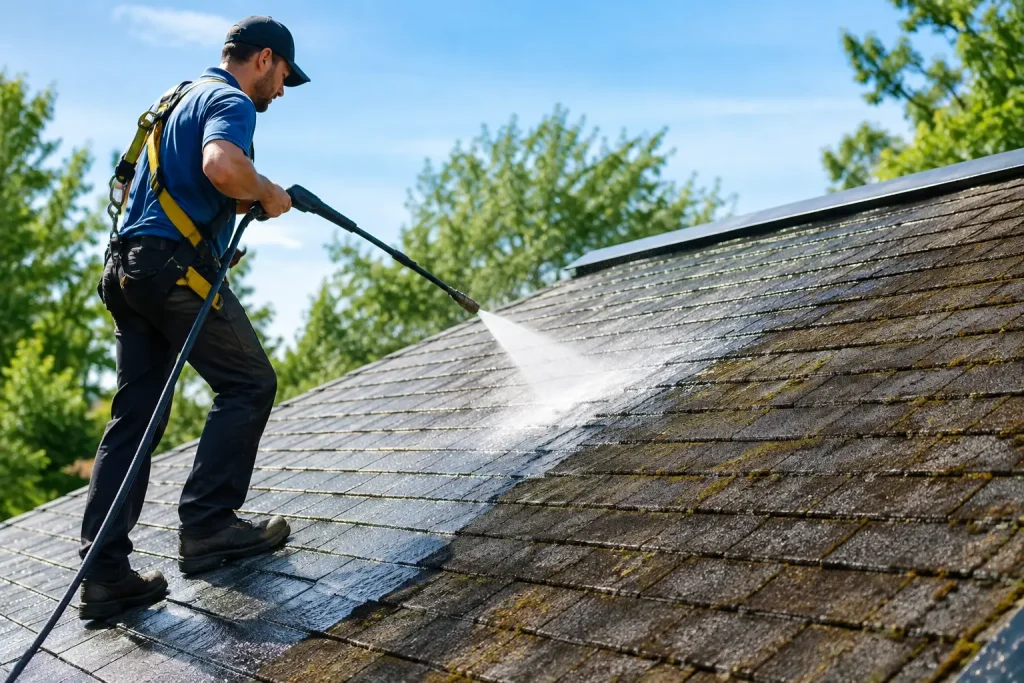
A roof can look worn out years before it actually is. Those dark streaks on asphalt shingles, green patches near shaded edges, and debris collecting in valleys are often maintenance issues, not a reason to plan an expensive replacement. The best roof cleaning approach removes the growth causing the discoloration without stripping granules, cracking tiles, or sending contaminated runoff toward landscaping and storm drains.
For homeowners, HOAs, and property managers, the goal is not simply a brighter roof for a few weeks. It is a cleaner surface, better drainage, protection for the roofing material, and a method that respects the property around it.
What Is the Best Roof Cleaning Method?
For most residential roofs, low-pressure soft washing is the best roof cleaning method. Rather than blasting the roof with high-pressure water, a trained technician applies a roof-safe cleaning solution at low pressure, allows it to work on algae, mildew, lichen, and surface grime, then rinses or treats the area according to the roof material and conditions.
This matters because roofing materials are not built to withstand aggressive pressure washing. Asphalt shingles have protective granules that can be loosened by excessive pressure. Concrete and clay tile can crack, shift, or lose their finish when cleaned carelessly. Even durable metal roofing has seams, fasteners, and coatings that deserve a controlled approach.
Soft washing is not a one-size-fits-all shortcut. The solution strength, dwell time, rinse method, and runoff plan should change based on the roof type, the level of growth, surrounding plants, drainage points, and manufacturer recommendations. A roof with light algae staining needs a different treatment than a tile roof with established lichen in shaded areas.
Why High Pressure Is Usually the Wrong Choice
High-pressure washing can make a roof look clean quickly, but speed is not the same as proper care. On shingle roofs, pressure can remove granules that help protect the roof from sunlight and weather. It can also force water beneath shingles, where moisture may contribute to leaks or damage to the roof deck.
Tile roofs bring different risks. Pressure can break brittle tiles, drive water under overlaps, and leave fragile edges vulnerable. It may also remove natural weathering unevenly, creating a patchy appearance that does not match the rest of the roof.
There are limited situations where controlled pressure may be used on certain durable roof components or to address loose debris, but that decision should be made after an inspection. It should never be the default method for cleaning the roof surface itself.
Know What Is Causing the Stains
A good cleaning plan starts with identifying the problem. Dark streaks on asphalt shingles are often algae, especially in areas that experience moisture, morning marine layer, shade, or limited airflow. Green growth may be moss or algae. White or pale crusty patches can be lichen, which attaches more firmly and may need additional treatment and patience.
Dirt, airborne dust, leaves, bird droppings, and pollen also contribute to a dull roof. In coastal Southern California, roofs can collect salt air residue and moisture-driven growth even when the weather feels dry much of the year. Trees that shade the roof or drop organic debris can make the problem return faster.
Cleaning the visible stain without addressing the conditions around it can limit how long the results last. Trimming branches away from the roofline, keeping gutters clear, and removing leaf buildup from valleys all help reduce retained moisture.
Roof Cleaning Must Protect More Than the Roof
A careful roof wash includes the areas below it. Cleaning solutions and loosened roof grime can travel into gutters, downspouts, planting beds, patios, and storm drains. That is why preparation and runoff control are part of professional work, not an optional extra.
Before cleaning begins, nearby plants should be watered and protected as appropriate, and technicians should identify drainage routes. Gutters and downspouts need attention because they can carry roof runoff directly to the ground or a drain connection. Afterward, vegetation should be rinsed and the property checked for any residue.
For commercial properties, HOAs, and sites near sensitive drainage areas, water recovery is especially valuable. A closed-loop water recovery process captures contaminated wash water instead of allowing it to flow into waterways. It also supports more responsible water use while helping property managers meet the higher standard their residents, tenants, and communities expect.
The Best Roof Cleaning Process Starts With an Inspection
No two roofs age the same way. A professional should inspect the roofing material, its condition, the steepness of the roof, access points, growth patterns, drainage, and nearby landscaping before providing a treatment plan. This also creates an opportunity to spot obvious maintenance concerns, such as clogged gutters, broken tiles, lifted flashing, or heavy debris accumulation.
A responsible contractor will be direct if cleaning is not the right first step. If the roof has widespread material failure, active leaks, cracked tiles, or loose shingles, roofing repairs should come before washing. Cleaning cannot restore a roof that has reached the end of its service life, but it can help a sound roof look cared for and remain easier to inspect.
The actual cleaning should be deliberate. Loose debris is removed where appropriate, sensitive areas are protected, the roof is treated with the correct low-pressure method, and the crew completes a final walkthrough. That final check matters because roof cleaning affects gutters, walls, windows, walkways, and landscaping below. The job is not finished until the surrounding property is clean and the customer can see the result.
How Often Should You Clean a Roof?
Most roofs do not need annual chemical treatment. The right frequency depends on shade, tree cover, roof material, moisture exposure, and how quickly algae or moss returns. Some properties benefit from cleaning every two to five years, while others need periodic spot treatment or preventive maintenance sooner.
A simple visual check once or twice a year can prevent buildup from becoming a larger problem. Look for dark streaks spreading across shingles, moss at the edges of tiles, blocked gutters, leaf-filled valleys, and water that is not draining normally after rain. The earlier growth is addressed, the less aggressive the cleaning process usually needs to be.
For HOA communities and commercial properties, scheduled exterior maintenance can also make budgeting easier. Roof washing, gutter clearing, building washing, concrete cleaning, and common-area care can be planned around occupancy and seasonal needs instead of waiting for complaints or visible deterioration.
Questions to Ask Before Hiring a Roof Cleaner
Price matters, but the lowest estimate can become expensive if it leads to roof damage, plant loss, or runoff problems. Ask whether the company uses low-pressure soft washing for your specific roof material and how it protects shingles, tile, coatings, gutters, and landscaping.
It is also reasonable to ask how runoff will be handled, whether the crew is insured, and what the estimate includes. Does it cover gutter clearing, debris removal, protection of nearby surfaces, cleanup, and a final walkthrough? A clear scope prevents surprises and gives you a better basis for comparing quotes.
Be cautious of anyone promising to pressure wash every roof the same way or quoting without asking about material, condition, and access. Quality roof cleaning is careful work. It requires the right equipment, trained judgment, and enough time to protect the rest of the property.
A Cleaner Roof Is Preventive Maintenance
A stained roof changes how an entire property looks, whether it is a family home, a condominium community, or a commercial building. More importantly, algae, moss, debris, and clogged drainage can hide conditions that deserve attention. Cleaning makes the roof easier to evaluate and helps prevent unnecessary neglect.
Channel Islands Pressure Washing approaches roof soft washing with the same maintenance-first mindset used across exterior cleaning: maintain it, don’t replace it. When the roof is structurally sound, the right low-pressure treatment can restore curb appeal while protecting delicate materials, nearby landscaping, and the environment around your property.
If dark streaks or roof growth are becoming more noticeable, do not wait for the next major rain or a costly replacement quote. A professional site assessment can tell you what is on the roof, whether cleaning is appropriate, and what method will protect your investment.