
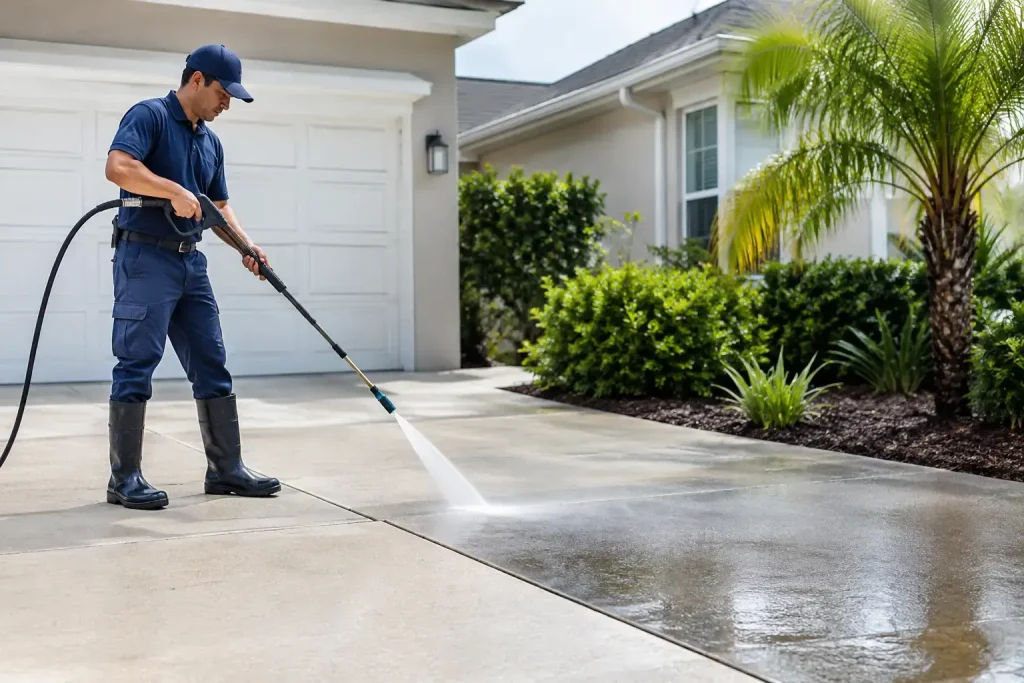
A driveway can look permanently worn long before the concrete itself is ready for replacement. In Oxnard, concrete collects tire marks, oil drips, leaf tannins, algae, sprinkler overspray, salt air residue, and everyday foot traffic. Professional Oxnard concrete cleaning addresses those visible problems without treating every surface or stain as if it needs the same high-pressure approach.
For homeowners, HOAs, and commercial property managers, clean concrete is about more than appearance. It helps preserve the surface, supports safer walkways, and keeps a property looking actively cared for. The right cleaning process also accounts for where the wastewater goes, especially near storm drains and landscaped areas.
Why Concrete Gets Dirty So Quickly
Concrete is durable, but it is not smooth or sealed by default. Its tiny pores hold onto dirt, automotive fluids, moisture, and organic growth. Once contaminants settle below the surface, a quick rinse with a hose may brighten the area temporarily while leaving the actual stain behind.
Oxnard’s coastal conditions add another layer of maintenance. Morning moisture and shaded areas can encourage algae and mildew. Wind carries dust and debris onto patios and walkways. Driveways and parking areas pick up oils, rubber marks, and brake dust. At multi-family communities and retail properties, the issue compounds quickly because high traffic gives grime less time to dry or wear away naturally.
The practical goal is not to make weathered concrete look brand new at any cost. It is to remove buildup safely, improve the property’s presentation, and avoid premature replacement. Maintain it, don’t replace it.
Oxnard Concrete Cleaning Is Not One-Pressure-Fits-All
Pressure is useful, but pressure alone is not a cleaning plan. A technician should consider the age and condition of the concrete, the type of staining, nearby stucco and landscaping, drainage paths, and whether the area has been sealed or previously repaired.
A newer decorative finish, exposed aggregate walkway, paver border, or deteriorating slab may need a different method than a standard driveway. Excessive pressure or a poorly chosen tip can leave uneven cleaning lines, etch the surface, disturb loose material, or drive contaminants into surrounding areas. The best result comes from matching the treatment, water flow, and finishing method to the surface in front of the crew.
For broad flatwork, professional surface-cleaning equipment creates a more even appearance than sweeping a wand back and forth. Detailed edge work and spot treatment matter, too. Corners, curb lines, expansion joints, and areas near garage doors often hold the grime that makes a freshly cleaned driveway still look unfinished.
Treating Oil, Tire Marks, and Organic Stains
Different stains require different expectations. Fresh oil often responds better than old oil that has baked into porous concrete for months or years. Degreasers and controlled agitation can lift a substantial amount of contamination, followed by appropriate rinsing and recovery. Deep, long-standing oil stains may lighten dramatically without disappearing completely in one visit.
Tire marks in parking areas and driveways are another common concern. They may look like ordinary dirt but often need targeted treatment to break down the rubber and road film before surface cleaning. Rust, paint, fertilizer marks, and irrigation staining each call for their own process. Applying the wrong chemical can create a larger discoloration problem than the original stain.
Algae and mildew need attention for more than curb appeal. They can make shaded paths, pool-adjacent concrete, and common-area walkways slippery when damp. Cleaning removes the visible growth, while a tailored treatment can help address what is remaining in the pores. How long the results last depends on shade, irrigation patterns, drainage, and ongoing traffic.
Water Recovery Matters on Concrete Projects
Dirty runoff does not simply disappear when it reaches the curb. Water carrying oil, grime, chemicals, and debris can enter storm drains and move toward local waterways. That is a concern for property owners and managers, particularly on larger commercial sites, parking areas, and HOA common spaces.
Channel Islands Pressure Washing uses closed-loop water recovery practices designed to capture runoff rather than allowing contaminated wash water to travel across the property. This approach helps reduce unnecessary water use and keeps the job focused on responsible cleaning, not just fast cleaning.
Water recovery is especially valuable where a concrete area slopes toward a drain, landscaping, or public street. Crews can plan containment before work begins, manage the direction of water, and collect wastewater as the surface is cleaned. This is one reason a site assessment is worth more than a generic price based only on square footage.
Residential Concrete Areas Worth Maintaining
For a home, the driveway is usually the first concrete surface guests see, but it should not be the only one on the maintenance plan. Patios, side yards, front walkways, pool decks, courtyard slabs, and trash-can pads all accumulate buildup in different ways.
A clean front path makes landscaping and exterior paint look better without changing either one. A refreshed patio makes outdoor furniture and entertaining spaces more inviting. Cleaning around trash bins, pet areas, and side gates can reduce odors and improve the overall feel of the property. If concrete has cracks, spalling, or heavy wear, cleaning can clarify its true condition and help an owner decide whether a repair or sealant is appropriate.
If a surface has been sealed, painted, or coated, mention it during the estimate. That information affects product choice and pressure settings. The goal is to clean the surface without lifting or damaging a finish that is still performing well.
Commercial and HOA Concrete Needs More Planning
Commercial properties and HOA communities have more variables than a single driveway. There may be tenant schedules, customer access, delivery lanes, parked vehicles, drainage restrictions, noise considerations, and multiple surface types in one cleaning zone. The work needs to be organized so it improves the property without creating unnecessary disruption.
Parking areas, dumpster pads, storefront approaches, breezeways, stair landings, sidewalks, and clubhouse patios benefit from recurring maintenance. A planned schedule is often more cost-effective than waiting until stains become widespread or a property inspection raises concerns. Regular cleaning also helps property managers present a more consistent standard to residents, tenants, and visitors.
For these properties, timing matters. Early-morning, evening, or low-traffic scheduling may be the best fit, depending on the location. A professional crew should identify access requirements, protect surrounding areas, manage water responsibly, and leave the work zone orderly when the job is complete.
When to Clean and When to Consider Additional Service
Concrete cleaning is a strong first step, but it cannot repair structural damage. If a slab has significant cracking, sinking, extensive flaking, or failed coating, cleaning will improve its appearance while revealing the need for another type of repair. That is useful information, not a failed cleaning outcome.
After cleaning, some surfaces may benefit from sealing to make future oil and dirt removal easier. Sealing is not always necessary, and the right choice depends on the concrete’s condition, desired appearance, traffic level, and maintenance budget. A property with persistent irrigation overspray may need irrigation adjustments as much as it needs repeated cleaning.
The clearest signs that it is time to schedule service are visible dark traffic lanes, slippery green growth, recurring oil spots, dirty curb appeal, or a concrete area that makes an otherwise well-kept property look neglected. Addressing these issues earlier generally gives cleaning products and equipment a better chance to deliver even results.
A Straightforward Way to Get Started
The process should be simple. First, a site assessment identifies the concrete areas, stains, access points, drainage conditions, and any sensitive adjacent surfaces. Next, the property owner receives a clear, no-obligation estimate based on the actual work involved rather than a vague promise.
Once the work is scheduled, the crew prepares the area, uses surface-appropriate cleaning methods, and manages runoff throughout the service. A final walkthrough gives the customer a chance to review the result and discuss maintenance needs for driveways, walkways, parking areas, or common spaces.
Clean concrete does not need to be an afterthought or a replacement project waiting to happen. A careful cleaning plan can restore the surfaces people use every day while respecting the property, the schedule, and the waterways beyond the curb.