
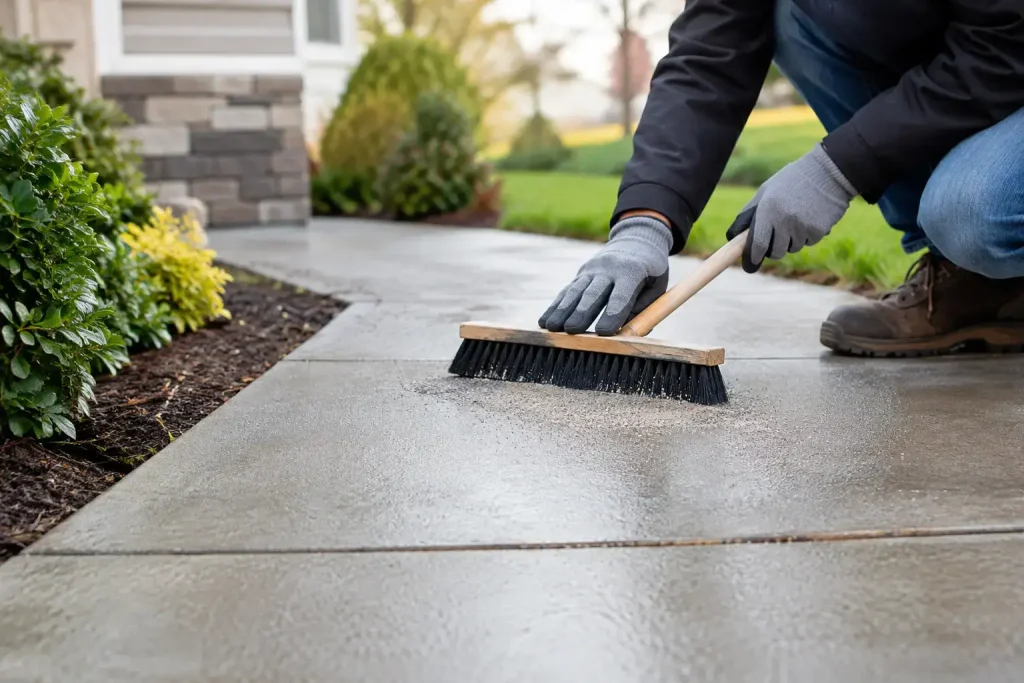
A concrete walkway can look clean from a distance and still become a slip hazard after a cool morning, coastal fog, rain, or routine landscape watering. To prevent slippery concrete walkways, property owners need to address more than visible dirt. The real issue is usually a combination of moisture, organic growth, surface wear, and poor drainage that allows slick residue to return.
For homes, HOAs, retail centers, and commercial properties, a safer walkway protects visitors while preserving the concrete you already have. Maintain it, don’t replace it. With the right cleaning method and a sensible maintenance plan, most concrete paths can stay cleaner, safer, and more welcoming without premature resurfacing.
Why Concrete Walkways Become Slippery
Concrete is durable, but it is not perfectly smooth or nonporous. Over time, its small surface pores collect dust, pollen, vehicle residue, irrigation minerals, and airborne contaminants. In Southern California’s coastal and inland climates, morning moisture can combine with that buildup to create a slick film underfoot.
Algae, mildew, moss, and lichen are frequent causes. They may appear as green, black, gray, or darkened patches, particularly in shaded areas near walls, landscaping, downspouts, and pool decks. Even when organic growth is not obvious, its residue can reduce traction.
Grease and oil are another concern around garages, loading areas, dumpster enclosures, restaurant entrances, and parking lots. A standard rinse may spread oily residue rather than remove it. High-traffic commercial walkways can also become slippery simply because tracked-in grime builds up faster than it is cleaned.
The risk increases when the walkway stays wet. Leaking irrigation heads, overflowing gutters, clogged drains, and landscaping that blocks sunlight can all create conditions where slick growth quickly returns.
Start With Cleaning That Removes the Cause
The most reliable way to improve traction is to remove the contaminants sitting on and within the concrete surface. Sweeping helps with leaves and loose debris, but it does not remove embedded grime, algae film, or oily residue.
Professional concrete cleaning typically combines surface-appropriate pressure, cleaning solutions selected for the stain or growth involved, and detailed edge work. The goal is not to use maximum pressure everywhere. Excessive pressure can leave visible wand marks, expose aggregate, or damage aged and weakened concrete. A careful approach cleans consistently across the walkway while protecting the surface.
For algae and mildew, the cleaning process should treat the biological growth rather than merely blast away the discoloration. Otherwise, spores and residue may remain in pores and shaded corners, allowing the problem to return sooner. For oil spots, a targeted degreasing treatment is often needed before surface cleaning can produce an even result.
At commercial sites and HOA common areas, runoff handling matters just as much as visible cleanliness. Dirty wash water can carry oils, sediment, cleaning residue, and contaminants toward storm drains. Channel Islands Pressure Washing uses closed-loop water recovery practices when appropriate to capture runoff and help keep contaminated water out of local waterways. This is especially valuable at parking areas, storefront approaches, and other large hardscape cleaning projects.
Improve Drainage Before Slippery Areas Return
Cleaning is the reset. Drainage is what helps preserve the result.
After the walkway is cleaned, observe where water collects. Puddles that linger after rain or irrigation are not just an appearance issue. Standing water gives algae and mildew the moisture they need to establish themselves. It can also point to a drainage problem that may worsen over time.
Check Irrigation and Downspouts
A sprinkler head aimed at the walkway can create daily wetting cycles that encourage slick growth. Adjust the spray pattern so it waters planting beds instead of concrete. If overspray is unavoidable, reduce the run time or schedule watering when foot traffic is low, while still following local watering rules.
Downspouts deserve the same attention. A clogged gutter can overflow directly onto a path, while a short downspout outlet may discharge water at the base of an entry walkway. Keeping gutters clear and routing water away from pedestrian areas helps reduce both slip risk and foundation-adjacent moisture.
Address Low Spots and Blocked Drains
If a walkway has settled or was installed with inadequate slope, water may consistently pool in one location. Small drainage corrections may solve the problem, but more significant low spots can require concrete repair or replacement by a qualified contractor. Cleaning cannot correct a structural drainage issue.
For properties with trench drains or area drains, remove leaves, landscape debris, and sediment before they form a blockage. This is particularly important before rainy periods and after wind events. A clear drain helps keep water moving instead of spreading across a walking surface.
Add Traction Where Cleaning Alone Is Not Enough
Not every concrete walkway needs a coating or traction additive. In many cases, thorough cleaning and better moisture control restore a safe walking surface. But smooth-finished concrete, poolside paths, heavily shaded entries, and high-traffic commercial approaches may benefit from additional slip-resistance measures.
A concrete-safe anti-slip treatment can increase surface grip without dramatically changing the appearance of the walkway. These treatments work differently from thick coatings, which can peel or become uneven if the concrete was not properly prepared. The right option depends on the concrete’s age, finish, condition, and exposure to water.
Textured coatings and sealers with traction additives can also be useful in select settings. They require more upkeep than bare concrete and should be chosen carefully. A glossy sealer may make the surface look richer, but it can be a poor choice for a frequently wet walkway unless a compatible non-slip additive is included.
For commercial properties, make sure any treatment aligns with site safety expectations, accessibility needs, and manufacturer instructions. The best-looking finish is not necessarily the safest one for customers, tenants, delivery drivers, or maintenance staff.
Build a Maintenance Schedule Around the Property
Concrete does not need the same service schedule everywhere. A sunny front path at a single-family home may need periodic cleaning only when buildup becomes noticeable. A shaded condominium breezeway, restaurant entrance, or shopping-center sidewalk may need a more regular schedule because foot traffic, irrigation, and organic debris keep reintroducing contaminants.
Watch for early warning signs: darkened walking lanes, green growth near landscape borders, a slippery feel after dew, recurring puddles, or complaints from residents and guests. Addressing these signs early is easier and more affordable than waiting until the walkway looks heavily neglected.
As a practical baseline, sweep debris regularly and inspect drainage monthly. Schedule a deeper professional cleaning when traction declines, organic growth becomes visible, or the property’s appearance standards call for a refresh. Sites with dense shade, mature landscaping, coastal moisture, or heavy public use may need service more often.
Avoid Common Concrete Cleaning Mistakes
The wrong maintenance method can make a walkway look worse or create a short-lived result. Household bleach used without proper dilution, containment, or rinsing can harm nearby plants and may not fully remove embedded residue. It should never be allowed to flow into storm drains.
Pressure washing with a narrow tip held too close to concrete can cut lines into the surface. Those stripes are difficult to correct and can make a walkway look patchy even after it dries. Aggressive cleaning also may remove fragile surface material from older concrete.
Another mistake is sealing over dirt, algae, or moisture. A sealer should be applied only after the surface is fully cleaned, dry, and evaluated for the right product. Trapping contaminants underneath can lead to blotchy results, peeling, or recurring slickness.
Do not rely on a doormat as the primary solution for an unsafe approach. Mats can reduce tracked-in debris at an entrance, but they can also curl, slide, or hold moisture if they are not designed and maintained for outdoor use.
A Practical Path to Safer Walkways
A professional site assessment can identify whether the main cause is biological growth, oil contamination, irrigation overspray, gutter overflow, poor slope, or worn concrete. From there, the work should be straightforward: assess the surface, provide a clear estimate, and schedule cleaning around the property’s needs.
For an HOA board, facility manager, or homeowner, this approach makes maintenance easier to plan. It also supports a cleaner first impression at entries, sidewalks, courtyards, and common areas without treating concrete replacement as the first answer.
A dry, clean walkway should not be an accident waiting to happen after the next misty morning. Address buildup early, keep water moving away from footpaths, and choose traction solutions only where the surface truly needs them. That is how a well-maintained concrete walkway stays safer for the people who use it every day.