
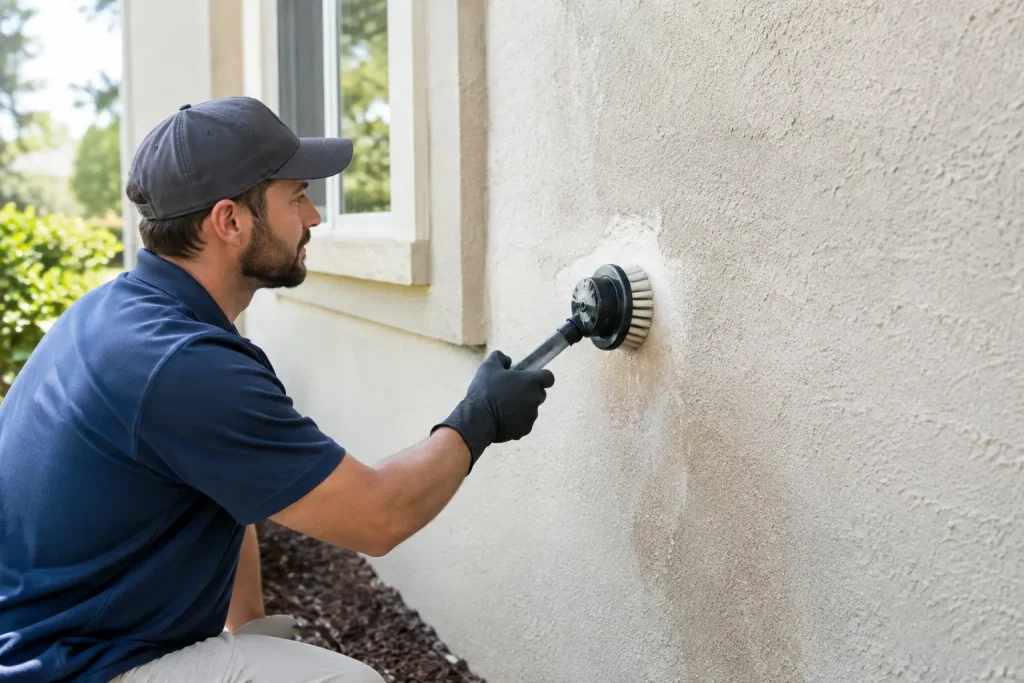
A dark streak below a window, rusty-looking drip lines under a planter, or green buildup along a shaded wall can make an otherwise well-kept property look neglected. Stucco stain restoration is not simply a matter of spraying the wall with more pressure. Stucco is a textured, porous finish, and the wrong cleaning method can scar the surface, force water behind the coating, or leave a noticeably uneven result.
For homeowners, HOAs, and commercial property managers, the goal is straightforward: restore the building’s clean appearance without creating a repair project. That calls for the right diagnosis, surface-specific cleaning, and responsible runoff handling from start to finish.
Why Stucco Stains Need a Different Approach
Stucco holds onto contaminants because of its rough, absorbent texture. Dirt settles into low spots, sprinkler water leaves mineral deposits, and moisture can support algae or mildew growth. Coastal air, landscaping debris, vehicle exhaust, roof runoff, and irrigation overspray all add to the problem.
Pressure alone is rarely the answer. High pressure may remove some surface dirt, but it can also blast away paint, erode the texture, open small cracks, and drive water into vulnerable areas around windows, doors, vents, and trim. A wall may look cleaner for a moment while being left with permanent striping or damage.
Professional restoration starts by identifying what is actually on the stucco. Organic growth, mineral staining, rust, soil splash, oxidation, and paint failure do not respond to the same treatment. The best method depends on the stain, the age and condition of the finish, whether the wall is painted or unpainted, and the nearby landscaping and hardscape.
Common Stucco Stains and What Causes Them
Many stains return because the source was never addressed. Cleaning is still worthwhile, but understanding the cause helps property owners make better maintenance decisions afterward.
Irrigation and hard-water stains
Sprinklers that repeatedly hit a wall can leave white mineral crust, gray spotting, or darker dirt trails where water has carried soil down the surface. Hard-water deposits can be stubborn, especially around planters and entrances. Correcting the sprinkler angle after cleaning can make a major difference in how long the restored finish stays clean.
Algae, mildew, and moisture marks
Green, black, or gray staining often appears on shaded sides of buildings, beneath eaves, near dense landscaping, or where drainage keeps the wall damp. These stains need a controlled treatment that addresses organic growth without damaging the stucco or surrounding plants.
Roof and gutter runoff stains
Overflowing gutters and roof runoff can create long vertical streaks. The staining may include dirt, decomposed organic material, and minerals, particularly where water repeatedly follows the same path. If a gutter is clogged, sagging, or draining improperly, cleaning the stucco without correcting that issue is only a short-term fix.
Rust and metal stains
Rusty orange stains may come from sprinkler water, metal fixtures, exposed fasteners, patio furniture, or runoff from a gate or railing. Rust treatment requires care because aggressive products can discolor or etch adjacent surfaces. In some cases, staining has penetrated deeply enough that touch-up painting may be the practical final step.
Mud splash, pet stains, and everyday grime
Lower wall sections often take the most abuse. Rain can splash soil onto stucco, pets may leave staining near side yards, and busy walkways collect dust and grime. These areas are usually very restorable, but they still benefit from low-pressure cleaning and detailed finishing rather than a quick blast from a pressure washer.
How Professional Stucco Stain Restoration Works
A careful restoration process protects the wall first and cleans second. At Channel Islands Pressure Washing, that starts with a site assessment and a clear estimate, not a one-size-fits-all promise. The team looks at the staining, the wall condition, access, water flow, surrounding plants, and nearby surfaces that also need protection.
The cleaning method generally combines a suitable treatment solution with low-pressure soft washing and controlled rinsing. Soft washing allows the treatment to do the work instead of relying on force. This is especially valuable on painted stucco, older finishes, and walls with fine texture.
Sensitive areas are prepared before work begins. Windows, exterior lighting, electrical components, doors, decorative trim, and landscaping all require attention. Nearby concrete, pavers, and walkways may need cleaning as well, particularly if the stain source has carried runoff onto the ground.
For commercial buildings and HOA common areas, water management matters just as much as appearance. Contaminated wash water should not be allowed to flow into storm drains or nearby waterways. A closed-loop water recovery approach captures runoff where conditions require it, helping protect the property and the surrounding environment while keeping the work area cleaner.
The final detail work is where results become consistent. Deep texture can retain debris even after a general wash, and vertical drip lines may need extra attention. A final walkthrough gives the customer an opportunity to inspect the restored areas and discuss any stains that require follow-up, repair, or repainting.
When Cleaning Will Not Fully Restore the Finish
Honest stucco stain restoration includes setting realistic expectations. Some discoloration is surface-level and responds very well to professional cleaning. Other marks have penetrated the paint or stucco, or they are tied to a failing coating rather than surface contamination.
If paint has faded unevenly, peeled, chalked, or been damaged by prior high-pressure washing, cleaning can improve the appearance but cannot recreate a uniform finish. The same applies to cracks, failed caulking, efflorescence caused by moisture moving through the wall, and deeply embedded rust. Those conditions may call for repair or repainting after the cleaning process.
That does not make professional cleaning a wasted step. It often reveals the true condition of the surface, removes the contamination that would interfere with repairs, and helps avoid replacing materials that can still be maintained. Maintain it, don’t replace it, when the surface condition supports that approach.
Protecting Stucco Between Cleanings
The best maintenance plan is usually simple: keep water from repeatedly hitting the wall, remove organic debris before it holds moisture, and address runoff problems early. Trim shrubs and vines away from stucco so the wall can dry. Check gutters before the rainy season, and make sure downspouts direct water away from the building.
Irrigation deserves special attention. A sprinkler head that sprays a stucco wall for a few minutes each day can leave visible staining surprisingly fast. Adjusting heads, replacing damaged nozzles, and keeping planters from trapping moisture against the building are small corrections with a meaningful payoff.
For multi-unit communities and commercial sites, scheduled exterior cleaning can be more cost-effective than waiting for stains to become a complaint from residents, tenants, or customers. Common-entry walls, breezeways, storefronts, and shaded elevations often benefit from recurring maintenance because they receive more exposure and scrutiny.
A Practical Way to Schedule Service
If staining is isolated, a professional can assess whether the issue is limited to one wall or connected to gutters, roof runoff, concrete splashback, or landscape irrigation. That assessment makes the quote more accurate and helps prevent unnecessary work.
The process is designed to be straightforward. First, request an on-site assessment and no-obligation estimate. Next, schedule the work at a time that works for the property, with access and sensitive areas addressed in advance. Finally, review the completed cleaning and make a plan for any maintenance or repairs that will help preserve the result.
Clean stucco changes how a property feels from the street, the parking lot, or the front walkway. More importantly, careful restoration protects a finish that is costly to repair when it has been neglected or cleaned too aggressively. Address the stain source, use the right method, and give the surface the kind of maintenance that keeps it looking cared for long after the cleaning is complete.