
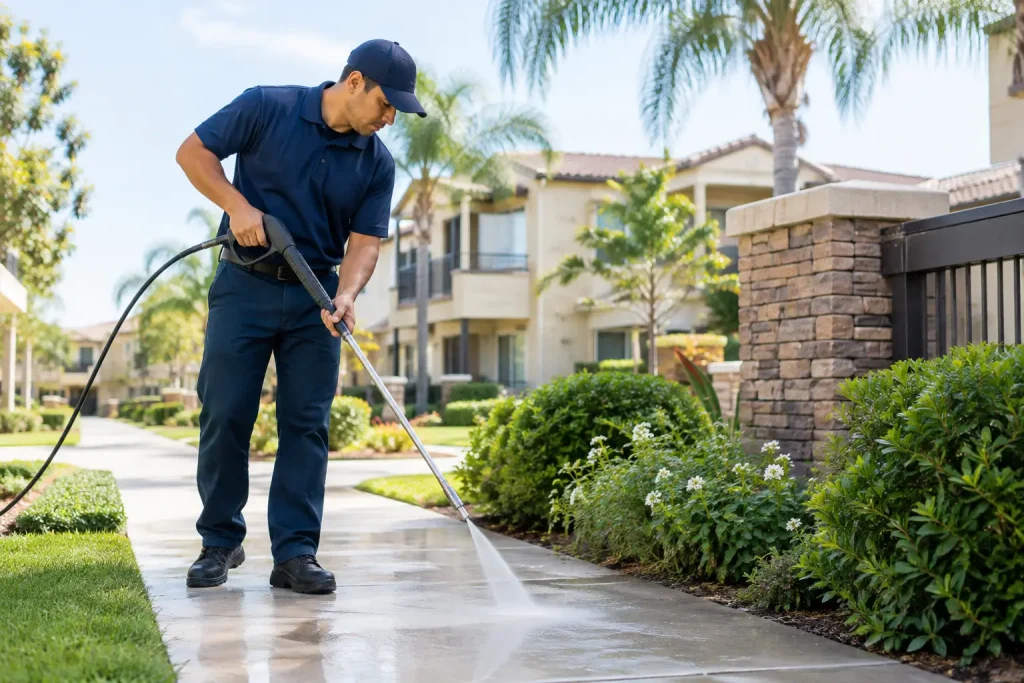
A dirty entry drive, stained pool deck, or algae-covered walkway can make an otherwise well-managed community look neglected fast. Ventura HOA cleaning is not just about improving curb appeal before an inspection or resident event. It is practical maintenance that protects expensive surfaces, helps reduce slip hazards, and gives residents confidence that their association is caring for the property they call home.
For HOA boards and property managers, exterior cleaning also comes with real responsibility. A one-size-fits-all pressure washer can scar concrete, strip delicate finishes, force water behind siding, or send dirty runoff toward storm drains. The right approach considers the surface, the surrounding landscape, resident access, and where the water goes after cleaning.
What HOA Exterior Cleaning Should Accomplish
Common areas take more abuse than most private homes. Foot traffic, vehicles, irrigation overspray, coastal moisture, pets, landscaping debris, sunscreen, food spills, and wind-blown dust all leave a mark. Over time, these conditions can discolor concrete, stain stucco, darken roofs, clog gutters, and make pavers look tired well before they are actually worn out.
A professional HOA cleaning plan should restore the property without creating a new maintenance problem. That means choosing cleaning methods based on the material rather than simply turning up the pressure. Concrete can often handle more aggressive washing than painted trim, roof tile, solar panels, wood fencing, or aging stucco. Delicate surfaces may need soft washing, targeted treatment, hand detail work, and a controlled rinse instead of high-pressure blasting.
The goal is simple: Maintain it, don’t replace it. Regular cleaning can extend the useful life of hardscape and exterior finishes while helping an HOA avoid premature repairs or replacement costs.
The Areas Residents Notice First
Residents and visitors form an opinion of a community long before they see a meeting agenda or reserve report. They notice the entrance monument, sidewalks, mailbox areas, gates, clubhouse patio, parking spaces, and the walk from the car to the front door. These are the places where routine cleaning has the most visible payoff.
Walkways, Curbs, and Concrete
Concrete collects tire marks, leaf tannins, drink spills, oil drips, mildew, and dark traffic patterns. In shaded areas or near irrigation, algae can become especially stubborn and may contribute to slippery conditions. Professional concrete cleaning removes buildup with the appropriate combination of surface cleaning, treatment, and rinsing, leaving a more even result than a quick pass with consumer equipment.
Parking areas deserve the same attention. Oil-stain treatment, tire-mark removal, and cleaning around dumpster enclosures or loading areas can improve appearance and reduce persistent odors. Not every stain disappears completely, particularly if it has penetrated old or porous concrete, but treating it early gives the best chance of improvement.
Pavers, Patios, and Pool Decks
Pavers are a valuable feature in many Ventura-area communities, but they can lose their color under dirt, mineral deposits, algae, and joint debris. Cleaning pavers requires care. Excessive pressure can disturb joint sand, damage edges, or leave inconsistent striping. A proper service accounts for the paver condition, drainage, existing sealant, and whether re-sanding or restoration is appropriate after cleaning.
Pool decks and shared patios need similar attention. These high-use spaces can collect sunscreen residue, food stains, mildew, and grime around furniture legs. The work should be scheduled to limit disruption, with adequate drying time before residents return to the area.
Buildings, Roofs, and Gutters
Stucco, siding, breezeways, awnings, and exterior trim can develop streaks from rain, irrigation, nesting birds, and coastal air. Building washing is often best completed with a low-pressure soft-wash approach that lifts organic growth and grime without driving water into vulnerable areas.
Roof cleaning calls for even more restraint. Roof tile, shingles, and underlayment are not surfaces for indiscriminate high pressure. Soft washing is designed to treat organic buildup at low pressure, helping preserve the roof while improving its appearance. Gutter clearing also matters because blocked gutters and downspouts can direct water where it does not belong, potentially affecting fascia, landscaping, and walkways below.
Runoff Management Is Part of the Job
Exterior cleaning water does not simply disappear once it reaches a drain. It can carry sediment, detergent, oil residue, algae, and other contaminants into the stormwater system. For an HOA, that creates an environmental concern and can complicate compliance expectations for shared properties.
A responsible contractor plans for water control before cleaning begins. At Channel Islands Pressure Washing, closed-loop water recovery equipment is used when appropriate to capture runoff and keep contaminated water out of waterways. This approach also reduces unnecessary water use compared with letting water run unchecked across pavement and into drains.
The right process depends on site conditions. A small breezeway, a broad parking lot, and a poolside deck require different containment plans. Drain locations, slopes, nearby landscaping, resident vehicles, and access points should be evaluated during the site assessment, not discovered after the equipment is running.
How to Build a Practical Cleaning Schedule
There is no single cleaning frequency that fits every Ventura HOA. A property near the coast may deal with salt air and moisture. A shaded community may see faster algae growth. A site with mature trees may need more frequent gutter clearing and walkway cleanup, while a newer, low-traffic complex may only need focused service in key areas.
Most associations benefit from separating routine appearance maintenance from deeper restoration work. High-visibility entries, sidewalks, dumpster areas, and pool spaces may need attention several times a year. Building washing, roof soft washing, paver restoration, and large-scale concrete cleaning may be scheduled less often based on visible conditions and budget.
Rather than waiting for the entire community to look dirty, property managers can document recurring trouble spots. Note where irrigation leaves mineral stains, where dog-urine splatter affects walls, where vehicles leak oil, and where shade encourages algae. That record makes it easier to prioritize the work that residents will notice and that protects the property most effectively.
What HOA Boards Should Ask Before Approving Service
The lowest bid is not always the lowest cost. If cleaning damages paint, dislodges paver sand, floods a walkway, or leaves dirty water at a storm drain, the association may spend more correcting the problem than it saved upfront.
Before approving Ventura HOA cleaning, ask how the contractor will clean each surface, manage runoff, protect landscaping, and work around resident access. Confirm whether the estimate identifies the specific areas to be cleaned and whether there is a plan for oil stains, delicate roof materials, or heavily soiled zones. Clear scope matters because it prevents assumptions on both sides.
It also helps to ask about scheduling and communication. Residents need notice when parking areas, sidewalks, or amenity spaces will be affected. A professional crew should arrive as scheduled, keep the work area organized, and complete a final walkthrough so the manager or board representative can review the results.
A Straightforward Way to Get the Work Done
A good HOA cleaning project starts with an on-site assessment. This is where the contractor evaluates materials, staining, drainage, access, and the areas that deserve the most attention. The association then receives a clear, no-obligation estimate and can schedule service around resident activity, vendor access, or upcoming inspections.
On cleaning day, the crew should use commercial-grade equipment along with surface-specific methods, not a single setting for every task. Afterward, a final review helps confirm that priority areas were addressed and identifies any maintenance items that may need follow-up later.
Clean common areas do more than photograph well for listings. They make daily life more pleasant for residents, support the standards your board works hard to maintain, and help protect surfaces that would be costly to replace. A thoughtful maintenance plan gives your community a cleaner starting point every day.