
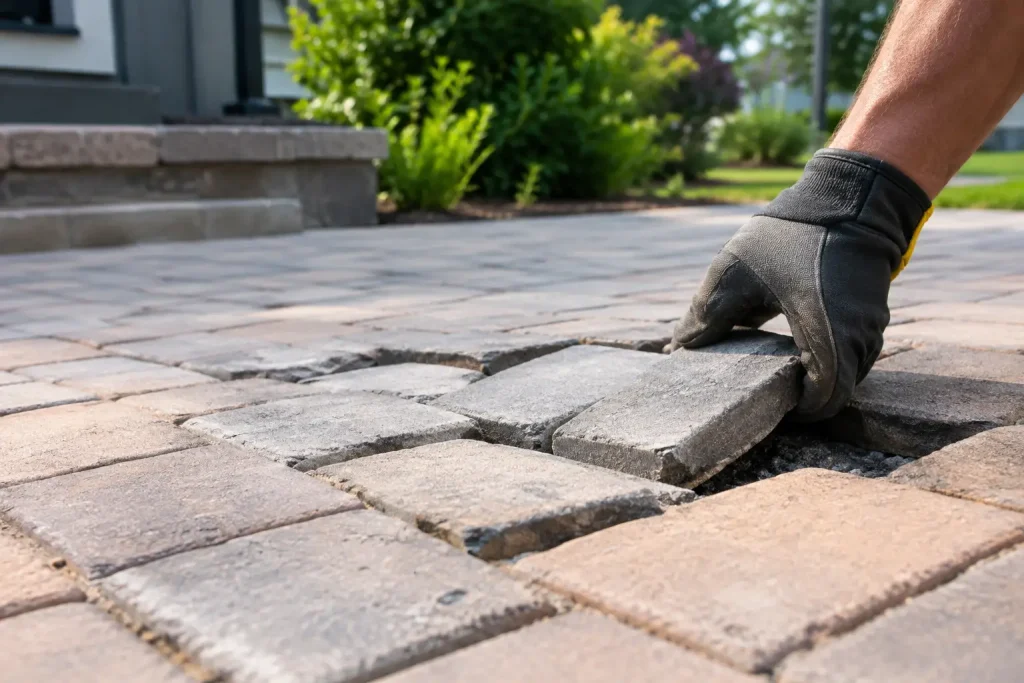
A paver patio can look perfectly fine until one corner starts holding water after every rinse, a walkway develops a low spot, or a driveway edge drops enough to catch a shoe or tire. Homeowners often ask why pavers sink after the problem becomes visible, but the movement usually began below the surface months or years earlier. Pavers are durable, repairable materials. The soil, base, drainage, and edge restraint beneath them determine whether they stay level.
For homes, HOAs, and commercial properties, sinking pavers are more than a cosmetic concern. Uneven surfaces can create trip hazards, direct water toward a building, loosen surrounding pavers, and make an otherwise clean property look neglected. The good news is that a targeted repair can often restore the surface without replacing the entire patio, walkway, pool deck, or driveway.
Why Pavers Sink: The Problem Is Usually Underneath
Individual pavers do not typically fail on their own. They move because the materials supporting them shift, wash out, settle, or lose containment. A properly installed paver system includes compacted subgrade soil, a compacted aggregate base, a thin bedding layer, tightly fitted pavers, joint sand, and secure edge restraints. When one layer is compromised, the surface above it follows.
Poor Base Compaction
The most common cause of sinking is an improperly compacted base. Soil and aggregate contain small air spaces when they are placed loosely. Over time, foot traffic, vehicles, irrigation, rain, and gravity compress those spaces. The pavers settle into the lower area, often creating a noticeable dip along a driveway, near a gate, or beside a heavily used walkway.
This can happen even on relatively new installations when the base was rushed, installed too thin for the intended load, or compacted unevenly. A patio has different base requirements than a driveway carrying SUVs, delivery vehicles, or trash bins. The repair needs to match how the surface is actually used.
Water Washing Away Support
Water is a frequent culprit, especially where pavers sink near downspouts, roof valleys, irrigation heads, pool equipment, or sloped landscaping. Runoff can carry away bedding sand and fine soil below the pavers. In time, a hidden void forms. The surface may feel solid at first, then suddenly settle after heavy rain or repeated watering.
Drainage problems are common around coastal Southern California properties because hardscape, roofs, and landscaping often meet in tight spaces. Water needs a planned path away from structures and across the property without undermining the paver base. Simply adding more joint sand on top will not correct a washed-out base below.
Failed or Missing Edge Restraints
Pavers depend on edge restraints to hold the entire field together. Without them, the outer pavers can spread outward under traffic and pressure. Joints widen, sand escapes, and nearby pavers begin to shift or sink.
This is especially common at driveway borders, curved paths, and transitions from pavers to concrete. If an edge restraint has cracked, separated, or been disturbed during landscaping work, movement may begin at the perimeter before spreading inward.
Soil Movement and Tree Roots
Some soil settles naturally over time, particularly where fill soil was used during construction or where a prior trench was dug for plumbing, drainage, or utilities. Clay-heavy soils can also expand when wet and shrink during dry periods, creating gradual movement below hardscape.
Tree roots create a different pattern. Instead of a soft depression, roots often push pavers upward into a ridge or hump. Removing roots without understanding the tree’s health and local requirements can cause more harm than good. In some cases, the best solution involves carefully lifting and relaying pavers around the root zone, along with advice from a qualified arborist when larger roots are involved.
Leaks, Irrigation, and Hidden Utility Issues
A low spot that keeps returning deserves a closer look. A leaking irrigation line, broken sprinkler head, damaged drain line, or plumbing issue can saturate the soil and erode the base repeatedly. You may see unusually green grass or plants beside the settled area, persistent dampness, algae growth, or water pooling even during dry weather.
Repairing pavers before correcting the water source wastes money. The surface may look level for a short time, then sink again as the leak continues below.
Signs the Problem Needs Attention Now
A small amount of paver movement is not always an emergency, but it should not be ignored. The earlier a problem is addressed, the more likely it can be isolated to a smaller area.
Watch for several warning signs at once: standing water that did not used to collect there, loose or rocking pavers, widening joints, crumbling edges, visible gaps near curbs or steps, or a depression that expands after rain. On commercial walkways and HOA common areas, even a modest uneven section can become a liability concern. Uneven pavers near entryways, pool decks, and accessible paths should be evaluated promptly.
If pavers are sinking against a building, the concern is greater. Water may be directed toward the foundation or exterior walls rather than away from them. That is a drainage issue first and a paving issue second.
How Professionals Repair Sunken Pavers
The right repair is rarely a matter of placing new sand over the top. A lasting repair starts by lifting the affected pavers and inspecting what happened below. One advantage of pavers is that many can be removed and reinstalled rather than discarded, provided they are still in good condition.
The repair area is excavated to the depth needed to expose unstable soil, washed-out bedding material, or damaged base aggregate. The subgrade is corrected and compacted, then new aggregate base is added in controlled layers and compacted again. After the base is properly graded, fresh bedding sand is screeded, the pavers are reset, and joints are filled with appropriate sand.
Drainage or edge-restraint repairs should happen at the same time when they caused the settlement. Depending on the site, that may mean extending a downspout, adjusting irrigation, improving grading, replacing a broken border restraint, or addressing a leak before the pavers are relaid.
The scope depends on the cause. A localized washout may require lifting only a small section. Broad settlement across a driveway or patio can indicate a base issue that extends farther than the visibly sunken area. A careful assessment prevents a patch repair from becoming a repeat repair.
Cleaning Is Maintenance, Not a Fix for Structural Settlement
Paver cleaning can make a tired patio or walkway look dramatically better, but pressure washing alone cannot rebuild a failed base. In fact, aggressive cleaning on already loose or poorly jointed pavers can remove more sand and expose existing movement.
That does not mean cleaning should wait until every repair is complete. Cleaning is a valuable part of paver maintenance when it is done with the right method and pressure for the surface. It removes slippery organic growth, embedded dirt, tire marks, and staining that can hide cracks, loose joints, and low spots. Once the true condition of the pavers is visible, it is easier to plan repairs and ongoing care.
For properties with runoff concerns, professional water recovery also matters. Cleaning wastewater can carry dirt, oils, cleaning products, and debris toward storm drains if it is not properly contained. Channel Islands Pressure Washing uses recovered-water practices to help protect nearby waterways while restoring exterior surfaces. That level of care is particularly useful for HOA common areas, retail walkways, and driveways with oil staining.
Preventing Pavers From Sinking Again
Prevention comes down to controlling water and protecting the structure beneath the pavers. Keep gutters and downspouts clear so roof runoff does not spill next to patios or walkways. Check irrigation seasonally, especially after landscaping changes, and make sure sprinkler heads are not repeatedly soaking paver edges or joints.
Keep an eye on joint sand and edge restraints. Joint material helps interlock pavers, while restraints keep the field from spreading. If sand consistently disappears after rain or cleaning, that is a reason to inspect drainage rather than repeatedly sweeping in more material.
For driveways and high-traffic commercial areas, avoid assuming a patio-style repair will hold up to vehicle loads. The aggregate base, compaction, and transition areas need to be designed for the traffic the surface receives. A good repair should leave the pavers level, stable, and properly sloped, not merely better looking from a distance.
A sunken paver is often the property’s early warning system for water, soil, or base trouble below. Addressing it while the affected area is small helps protect curb appeal, walking safety, and the investment already under your feet. Maintain it, don’t replace it – but make sure the repair starts where the problem began.