
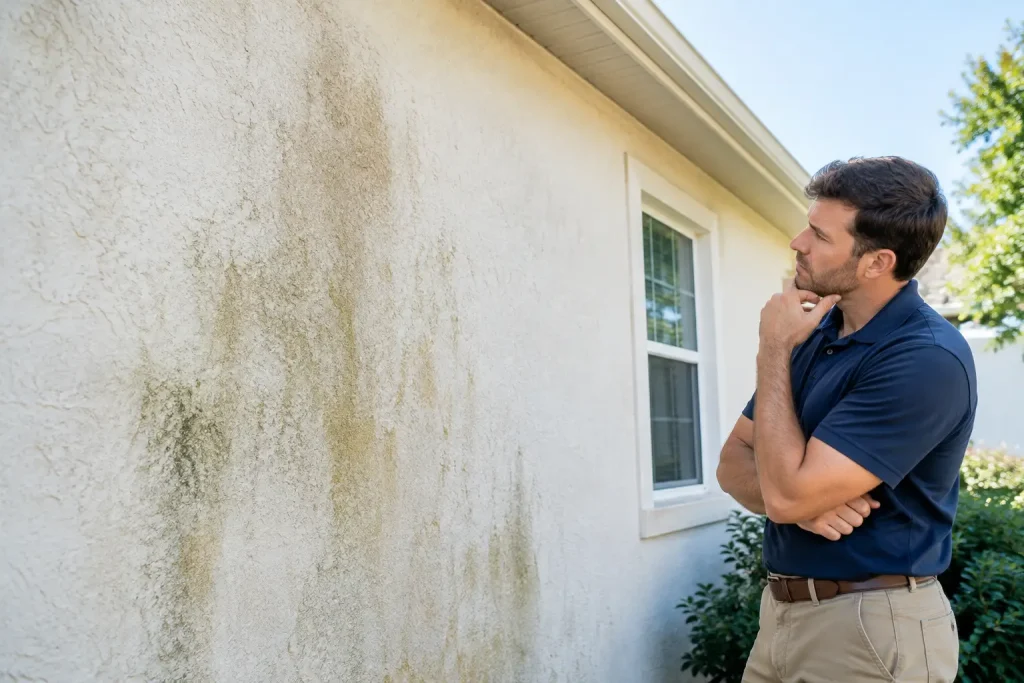
A stucco wall can look clean one season and noticeably blotchy the next. If you are asking, why does stucco discolor, the answer is usually not one single problem. In coastal Southern California, moisture, airborne grime, irrigation overspray, rust, and normal weathering often work together to leave streaks, dark patches, white residue, or faded areas on an otherwise sound exterior.
The good news is that discoloration does not automatically mean the stucco needs replacement or repainting. Finding the source first makes the difference between a cleaning that lasts and one that looks good for only a few weeks. Maintain it, don’t replace it.
Why Does Stucco Discolor in the First Place?
Stucco has a textured, porous finish. That texture gives a home or commercial building its character, but it also catches dust, moisture, pollen, salt air, and organic material more easily than a smooth painted surface. Some staining sits on the surface and can be safely cleaned. Other discoloration points to a drainage, irrigation, or coating issue that should be corrected before cleaning begins.
The location and shape of the discoloration offer useful clues. Vertical streaks below a gutter often indicate runoff. Dark growth on shaded walls points to persistent moisture. Orange-brown marks may come from metal fixtures or mineral-heavy water. A professional assessment looks beyond the visible stain so the right method is used on the right section of the building.
Moisture and organic growth
Moisture is the most common reason stucco develops dark green, gray, or black areas. Algae, mildew, and other organic growth thrive where walls stay damp, especially on north-facing elevations, behind landscaping, near sprinklers, or under rooflines with poor drainage.
This is particularly common in shaded courtyards, HOA common areas, and buildings near the coast. Morning marine moisture and limited sunlight can keep a wall damp long enough for growth to take hold. Cleaning removes the visible buildup, but trimming back plants, adjusting irrigation, and clearing gutters help prevent it from quickly returning.
Irrigation overspray and hard-water minerals
Sprinklers that hit the wall day after day can leave more than water spots. As the water evaporates, dissolved minerals remain behind. The result may be chalky white deposits, pale rings, or a dull, uneven-looking finish near lawns and planters.
Hard-water staining can be stubborn because it bonds to the textured surface. Aggressive pressure is not the answer. It can scar the finish, force water behind the stucco, or leave clean stripes that are more noticeable than the original stain. The safer approach depends on the stucco’s condition, whether it is painted, and the type of mineral deposit involved.
Rust stains from fixtures and metal runoff
Rust-colored drips usually begin above the stain. Metal awnings, brackets, railings, nails, light fixtures, vent covers, and even nearby furniture can release oxidized metal when exposed to rain or irrigation. A small rust issue can create a surprisingly large orange or brown streak down a light-colored wall.
Cleaning can improve the appearance, but the metal source should be repaired, sealed, or replaced as needed. Otherwise, the stain will return with the next wet season or sprinkler cycle. On older properties, it is also wise to check whether exposed fasteners or damaged flashing are contributing to the problem.
Dirt, pollution, and coastal air
Wind carries dust, pollen, vehicle exhaust, and fine particles onto exterior walls. In busy commercial areas, entrances and loading zones may develop gray film at hand height and near walkways. Coastal air adds salt residue, which can attract moisture and make other grime adhere more readily.
This type of discoloration often develops gradually, so property owners may not notice it until one wall is cleaned or painted. Then the contrast makes the rest of the building look darker than expected. Routine building washing keeps this buildup from becoming embedded in the finish and helps maintain a consistent appearance across the property.
Efflorescence and masonry salts
White, powdery staining is often efflorescence. It occurs when moisture moves through masonry or cement-based materials, carrying natural salts to the surface. Once the water evaporates, the salts remain as a pale, chalk-like residue.
Efflorescence is not always a structural concern, but repeated or heavy deposits deserve attention. It may indicate that water is entering through cracks, failed sealant, leaking gutters, planter walls, or another moisture pathway. Cleaning the salts without addressing the water source may provide only temporary relief.
Fading, oxidation, and uneven paint aging
Not every color change is a stain. Painted stucco can fade from sun exposure, particularly on south- and west-facing walls. Paint may also oxidize, leaving a chalky appearance that transfers onto a hand or cloth. Areas sheltered by eaves, trees, or patio covers can age differently from exposed sections, making the color variation more obvious.
Cleaning removes surface dirt, but it cannot restore pigment that has faded or paint that has broken down. In those cases, a careful wash is still useful preparation for repainting, but the final solution may be touch-up work or a new coating. This is why an honest inspection matters before promising that every discolored wall can be made to look brand new.
How to Tell Whether Stucco Needs Cleaning or Repair
Start by looking at the pattern. Surface grime is usually broad and fairly even. Organic growth tends to appear in shaded, damp areas. Water streaks begin near gutters, roof edges, windows, or cracks. A white crust points toward minerals or efflorescence, while rust stains usually trace back to a metal source.
Next, check the condition of the stucco itself. Hairline cracks, loose material, soft spots, or bubbling paint should be evaluated before washing. Water can enter through damaged areas, and high pressure can turn a small repair into a larger one. Cleaning is maintenance, not a substitute for correcting active leaks, failed flashing, or deteriorated caulking.
For HOA boards and commercial property managers, consistency is another consideration. Spot-cleaning one stained section may create a visibly brighter patch beside an untreated wall. A planned exterior cleaning can produce a more uniform result while allowing the team to identify recurring drainage or irrigation issues across the property.
The Safest Way to Clean Discolored Stucco
Stucco should rarely be treated like concrete. While concrete can often tolerate more force, stucco is a finish system with texture, seams, paint or color coats, and potential weak points. Too much pressure can etch the surface, strip paint, dislodge loose material, and drive water into cracks.
A surface-specific soft-wash approach is often the better choice for organic staining and general exterior buildup. It uses appropriate cleaning solutions and low pressure to loosen contaminants, followed by a controlled rinse. Manual detail work may be needed around windows, trim, fixtures, and areas where staining has settled deeply into the texture.
Runoff also matters. Cleaning solutions, grime, rust residue, and mineral deposits should not be allowed to wash unchecked into storm drains. Channel Islands Pressure Washing uses water-recovery practices designed to capture contaminated runoff, helping protect local waterways while reducing unnecessary water use. That is especially valuable for commercial properties, HOA communities, and homes with landscaping or hardscape near the walls.
Preventing Stucco Discoloration From Coming Back
The most effective prevention is simple maintenance performed before stains become deeply established. Keep gutters and downspouts clear so water does not overflow onto walls. Redirect sprinklers away from the building, and repair leaking heads that repeatedly soak the same area. Trim plants back enough to allow airflow and reduce moisture against the stucco.
Watch metal fixtures for rust, seal small gaps around penetrations when appropriate, and address roof or flashing issues promptly. A recurring exterior wash schedule can also prevent dust, salt air, algae, and pollution film from becoming a bigger restoration job later. The ideal frequency depends on shade, irrigation, traffic exposure, landscaping, and how close the property is to the coast.
A discolored stucco wall is often your property’s way of showing where water, minerals, or environmental buildup are collecting. Treat the cause with the same care as the stain, and the cleaned exterior will stay brighter, healthier, and easier to maintain.