
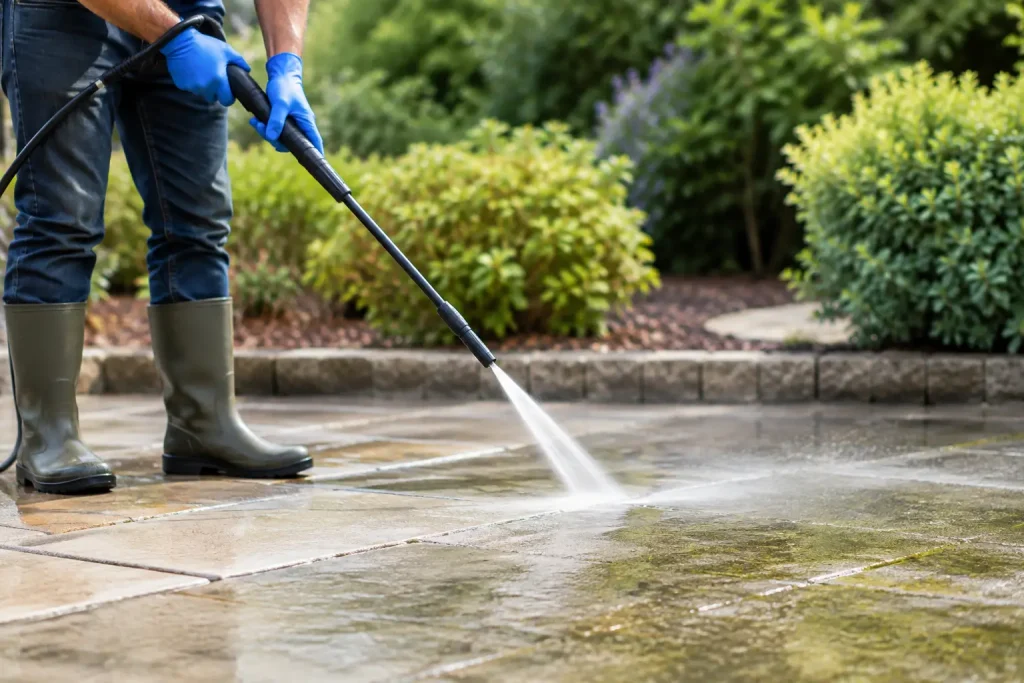
A green film on a driveway, roof, patio, or stucco wall is more than a curb-appeal issue. Algae holds moisture against surfaces, makes walkways slippery, and can leave a property looking neglected long before the material itself has reached the end of its life. Knowing how to remove algae safely helps protect the surface, the people walking on it, and the surrounding landscape and waterways.
The right method depends on where the algae is growing. A concrete sidewalk can tolerate a different cleaning approach than a tile roof, painted siding, pavers, or composite deck. The common mistake is treating every green stain with maximum pressure and a strong chemical. That can scar concrete, strip paver sand, damage roof materials, kill nearby plants, and send contaminated runoff toward a storm drain.
Start by Identifying the Surface and the Growth
Algae usually appears as a green, dark green, or blackish coating in damp, shaded areas. On Southern California properties, it often develops on north-facing walls, shaded patios, roof sections beneath trees, concrete walkways, pool-adjacent hardscapes, and pavers with limited drainage. It may grow alongside mildew, lichen, moss, or accumulated dirt, but these materials do not all respond the same way.
Before choosing a cleaner, look at the surface condition. Is the concrete cracked or heavily stained? Are pavers loose, sealed, or missing joint sand? Is the roof tile, asphalt shingle, metal, or another material? Is the siding painted, stucco, vinyl, or wood? A cleaning method that is safe for a durable commercial walkway may be too aggressive for an aging stucco finish or a delicate roof.
Also consider what is below and nearby. Downspouts, landscaping, pools, decorative stone, painted trim, storm drains, and neighboring properties all affect how cleaning should be planned. Safe algae removal begins with containment, not just cleaning power.
Why High Pressure Is Not Always the Answer
Pressure washing has a place in exterior maintenance, especially for concrete, parking areas, sidewalks, and properly prepared pavers. But pressure alone does not always solve an algae problem. It can remove the visible layer while leaving spores behind, allowing the growth to return quickly in shaded or damp conditions.
Too much pressure can also create expensive damage. On concrete, it may leave visible striping or etching. On pavers, it can blow out joint sand and disturb the base material. On painted surfaces and stucco, it can force water behind the finish or remove paint. On roofs, high pressure can dislodge granules, crack tile edges, compromise shingles, and push water into areas where it does not belong.
For roofs, siding, and other sensitive exterior materials, low-pressure soft washing is often the safer choice. This approach uses a surface-appropriate cleaning solution applied at low pressure, followed by careful rinsing when needed. The goal is to treat the organic growth rather than blast at it. A professional should always adjust the method for the material, age, condition, and manufacturer recommendations.
How to Remove Algae Safely: A Practical Process
For small, accessible areas, property owners can often handle light algae growth with patience and the right precautions. Start by choosing a dry day with little wind. Keep children, pets, and vehicles away from the work area, and wear gloves, eye protection, closed-toe shoes, and slip-resistant footwear.
First, sweep away loose leaves, soil, and debris. Organic buildup holds moisture and feeds algae, so removing it makes the treatment more effective. Pre-wet surrounding plants and cover delicate landscaping only if the cover will not trap heat or prevent airflow. Plants should be rinsed again after cleaning.
Use a cleaning product specifically labeled for the material you are treating, and follow the label directions exactly. Never assume that a stronger mix will provide a better result. Overconcentrated cleaners can discolor surfaces, harm vegetation, corrode metals, and create runoff concerns. Never mix cleaning products, especially products containing bleach, acids, or ammonia.
Apply the solution in manageable sections and allow the recommended dwell time. Do not let it dry onto the surface. Gently agitate durable surfaces with a soft-to-medium brush when the product instructions allow it. For delicate materials, skip aggressive scrubbing and use a soft brush only where appropriate.
Rinse thoroughly while controlling where the water goes. Direct rinse water away from doors, vents, pools, and storm drains. If the algae is on a sloped driveway, large patio, commercial entryway, roof, or building exterior, runoff management becomes a much bigger concern. That is often the point where professional cleaning is the safer option.
Surface-Specific Safety Considerations
Concrete and Commercial Walkways
Concrete is durable, but it is not indestructible. Algae on sidewalks, ramps, storefront approaches, and common areas creates a real slip-and-fall concern, particularly when morning moisture or irrigation keeps the surface damp. Professional pressure washing can remove algae efficiently, but it should be paired with the proper cleaner and controlled pressure to avoid uneven marks.
For commercial properties and HOAs, cleaning should also account for pedestrian access, traffic flow, signage, and water recovery. A clean walkway is valuable, but not if dirty water carrying algae, oil, cleaning residue, and sediment is allowed to enter a nearby drain.
Pavers and Patios
Pavers need a balanced approach. Surface cleaning can restore color and remove slippery growth, but excessive pressure can remove joint sand and encourage shifting over time. After a thorough cleaning, some paver areas may need joint sand replenishment or sealing, depending on the installation and the owner’s maintenance goals.
If algae keeps returning, look for the cause. Overwatering, poor drainage, tree shade, and accumulated debris are common contributors. Correcting those conditions can make the cleaning last longer.
Roofs
Roof algae should not be treated like driveway algae. Walking on a roof carries fall risks, and improper cleaning can shorten the life of shingles, tile, or other roofing materials. High-pressure washing is generally not the right choice for residential roofs.
A low-pressure roof soft wash, performed with the appropriate solution and runoff controls, can treat organic staining without the force that damages roofing materials. Gutters and downspouts should be considered as part of the plan, since they can carry cleaning runoff toward landscaping or drainage areas.
Stucco, Siding, and Building Exteriors
Algae can cling to shaded stucco, painted trim, vinyl siding, and building facades. These surfaces benefit from low-pressure application and careful rinsing. Forcing water behind siding or into cracks around windows can create a bigger maintenance issue than the original stain.
A professional building wash also allows for detailed finishing around fixtures, ledges, signs, and entryways where grime tends to collect. The result should look consistently clean, not simply brighter in the areas reached by a pressure wand.
Protect Landscaping and Prevent Runoff Problems
The environmental side of algae removal matters as much as the visible result. Exterior cleaning water may pick up algae, dirt, fertilizer residue, oil, soap, and cleaning products. Sending that water into a storm drain can carry pollutants directly toward local waterways.
For large-scale cleaning, water recovery is a responsible solution. A closed-loop recovery process captures wastewater instead of allowing it to flow across a parking lot, down a driveway, or into the street. This is especially valuable for commercial pressure washing, HOA common areas, oil-stained concrete, and properties near sensitive landscaping or drainage systems.
Channel Islands Pressure Washing uses surface-specific cleaning methods and recovered-water practices to help protect both the property and the environment. For property owners, that means cleaner concrete, pavers, roofs, and building exteriors without treating runoff control as an afterthought.
Make Algae Removal Last Longer
Cleaning removes existing growth, but maintenance reduces how quickly it comes back. Keep gutters clear so water does not overflow onto walls and walkways. Trim vegetation that blocks sunlight and airflow around patios, roofs, and siding. Adjust irrigation heads that spray hardscapes or walls, and sweep leaves from shaded areas before they turn into damp organic buildup.
For managed properties, regular exterior cleaning is usually more cost-effective than waiting for heavy buildup. A maintenance schedule can keep walkways safer, preserve a professional appearance for tenants and customers, and reduce the need for aggressive restoration later. Maintain it, don’t replace it.
When algae covers a roof, spreads across a large paver area, affects a commercial walkway, or involves runoff near storm drains, the safest next step is a site assessment. The right cleaning plan should protect the surface first, control the water, and leave the property looking cared for rather than merely washed.