
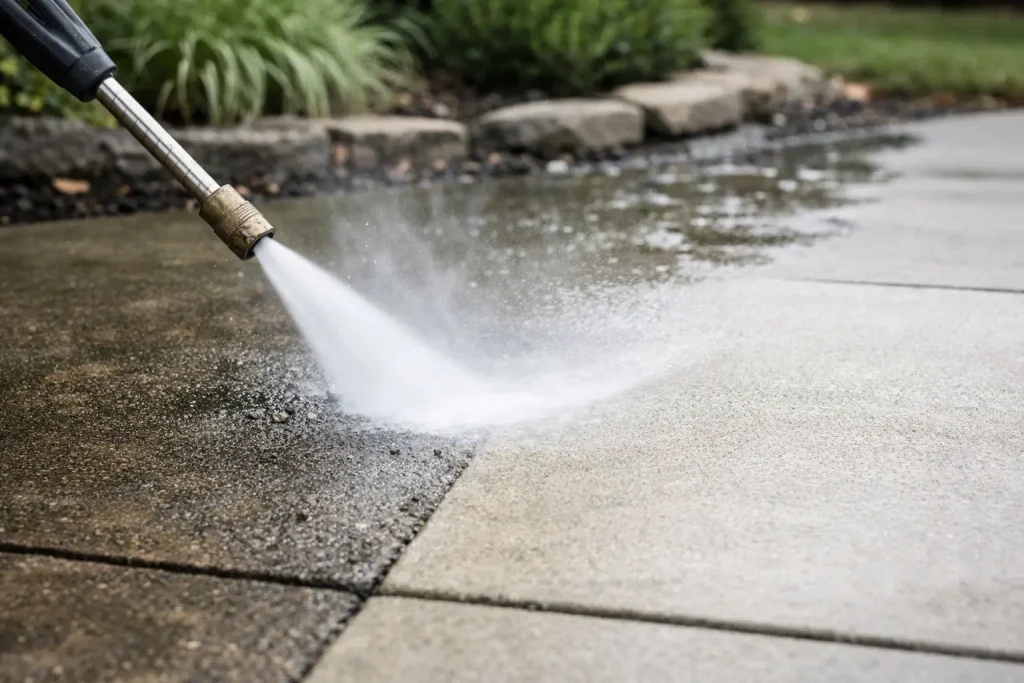
A driveway can look permanently stained after months of tire marks, oil drips, algae, and coastal grime. That is why pressure washing is appealing – but does pressure washing damage concrete? It can, when the wrong pressure, nozzle, technique, or cleaning method is used. Done correctly, however, professional concrete cleaning removes buildup while helping protect the surface from the wear that makes replacement more likely.
Concrete is tough, but it is not indestructible. Its top layer, often called the cream or paste, is the finished surface that gives a driveway, walkway, patio, or commercial sidewalk its smoother appearance. Aggressive pressure washing can strip or scar that layer, exposing the rougher aggregate below. The result may be uneven color, visible lines, a sandy texture, or a surface that holds dirt more easily than before.
Does Pressure Washing Damage Concrete? It Depends
Pressure washing damage is not usually caused by the machine alone. It is caused by applying too much force in the wrong way, especially on concrete that is already weakened, improperly cured, cracked, or worn by weather and traffic.
A narrow spray tip held close to the surface can act like a cutting tool. Operators sometimes make repeated passes over a stubborn stain, leaving streaks or etched patterns that remain visible long after the dirt is gone. High pressure can also dislodge loose material around cracks, spalls, control joints, and deteriorating edges.
The risk is greater with older concrete, poorly finished slabs, and surfaces that have already begun to flake. New concrete deserves caution as well. It needs adequate cure time before any pressure cleaning, and the installer’s recommendations should come first. Even a sound slab can be damaged if someone treats every stain with maximum pressure.
That does not mean concrete should never be cleaned. It means the cleaning plan should match the condition of the surface and the type of buildup being removed.
What Concrete Damage Looks Like
Pressure-washing damage is not always obvious during the job. A surface may look bright and clean while it is wet, then reveal lines, rough patches, or color variation once it dries. Knowing what to look for can help property owners stop a problem before it spreads across a larger area.
Etching is one of the most common issues. It appears as lighter, rougher areas where the upper layer of concrete has been removed. Wand marks can show up as stripes, swirls, or overlapping arcs, especially when a spray wand is moved inconsistently.
Surface pitting and exposed aggregate can occur when a slab is weak or the pressure is too concentrated. In more severe cases, existing flakes or chips become larger. Cleaning may also uncover pre-existing defects that grime had hidden, but a careful professional should be able to distinguish between existing deterioration and damage caused during cleaning.
On decorative surfaces, the stakes are higher. Stamped, colored, stained, sealed, or exposed-aggregate concrete needs a tailored approach. A method that is acceptable for an unfinished parking area may permanently alter the finish of a decorative patio or entryway.
The Biggest Factors That Affect Risk
PSI matters, but it is only one part of the equation. Gallons per minute, nozzle angle, distance from the slab, water temperature, detergent choice, and the operator’s pace all affect the final result. More pressure is not automatically better cleaning.
A wide fan tip distributes water over a broader area than a narrow tip. Keeping the wand at a consistent distance and moving it evenly reduces the chance of visible marks. On large, sound concrete areas, a properly operated surface cleaner can produce a more uniform finish than a wand alone. It must still be used at an appropriate setting, with attention to edges and weak spots.
Stains should also be treated based on their source. Oil, rust, algae, tire marks, pet stains, paint, and irrigation residue do not respond to the same approach. Trying to blast every stain away with pressure may damage the concrete without fully removing the discoloration. Pre-treatment, dwell time, controlled rinsing, and manual detail work often make the difference.
When to Avoid High-Pressure Cleaning
Some conditions call for reduced pressure, soft washing, targeted spot treatment, or another maintenance solution altogether. If concrete is crumbling, heavily spalled, or showing widespread surface failure, washing will not repair it. Strong pressure may remove more loose material and make the deterioration more apparent.
Be especially careful around expansion joints, cracks, drain channels, coatings, sealants, and repaired areas. These places can be more vulnerable than the main slab. Commercial properties may also have drainage requirements, pedestrian safety concerns, or nearby landscaping that changes how cleaning should be performed.
For concrete with a sealer or coating, test a discreet area first. Some cleaning solutions and high-pressure rinsing can dull, lift, or shorten the life of the coating. A fresh sealer may need time to cure before cleaning, while an aging sealer may need to be removed and reapplied as part of a larger maintenance plan.
How Professionals Clean Concrete Without Creating New Problems
A responsible concrete-cleaning service starts with an inspection rather than turning on the equipment immediately. The team should identify cracks, weak edges, old repairs, oil spots, algae growth, and decorative finishes before recommending a method. This protects both the property owner and the cleaning crew by setting realistic expectations about what can be restored safely.
The work should begin with the least aggressive effective method. For a typical driveway or walkway, that may involve a surface-safe cleaning solution, enough dwell time to loosen organic buildup or grease, controlled pressure cleaning, and detailed rinsing. Stubborn oil stains may need specialized treatment and more than one visit. Complete removal is not always possible when oil has penetrated deeply into porous concrete, but careful treatment can significantly improve appearance and reduce slippery residue.
A skilled operator also pays attention to runoff. Dirty wash water can carry oil, detergents, sediment, paint residue, and other contaminants toward storm drains. On residential and commercial properties, water recovery is a practical part of responsible service, not an afterthought. Channel Islands Pressure Washing uses closed-loop water recovery practices to capture runoff where appropriate, helping keep contaminated water out of local waterways while reducing unnecessary water use.
A Few Smart Steps Before Scheduling Service
Property owners can make the assessment more productive by noting where stains began and how long they have been present. An oil drip beneath a parked vehicle, recurring green growth in a shaded walkway, or rust below a metal fixture each points to a different cleaning need. If a stain keeps returning, cleaning it without addressing the source may only provide a temporary improvement.
Move vehicles, outdoor furniture, planters, and loose items from the work area when possible. Let the cleaning team know about drainage concerns, fragile landscaping, recent repairs, or surfaces that have been sealed or painted. For HOA and commercial managers, it also helps to schedule work during lower-traffic periods and communicate any access changes to residents, tenants, or customers.
After cleaning, allow the concrete to dry fully before judging the final appearance. Damp concrete naturally looks darker and can temporarily hide subtle variations. A professional walkthrough after the surface has been cleaned gives you the opportunity to review results, point out any questions, and discuss whether sealing, spot treatment, or recurring maintenance makes sense.
Maintain It, Don’t Replace It
Concrete replacement is expensive, disruptive, and often unnecessary when the slab is structurally sound. Routine cleaning removes slick algae, corrosive residues, embedded grime, and visual neglect before they become larger property-maintenance concerns. It also makes cracks, drainage problems, and areas of wear easier to see and address early.
The goal is not to make every slab look brand new at any cost. It is to clean it safely, improve its appearance, and preserve the surface you already own. Maintain it, don’t replace it – and choose a cleaning method that treats your concrete, your property, and the surrounding environment with care.
Pingback: Property Manager Exterior Cleaning Guide – Channel Islands Pressure Washing, LLC
Pingback: Soft Washing Versus Pressure Washing for Your Home – Channel Islands Pressure Washing, LLC
Pingback: Paver Restoration That Protects Your Property – Channel Islands Pressure Washing, LLC
Pingback: DIY Versus Professional Power Washing: Which Fits? – Channel Islands Pressure Washing, LLC
Pingback: Condominium Cleaning Checklist for Cleaner Common Areas – Channel Islands Pressure Washing, LLC
Pingback: How to Clean Pavers Safely Without Causing Damage – Channel Islands Pressure Washing, LLC
Pingback: Pool Deck Restoration Guide for Safer Surfaces – Channel Islands Pressure Washing, LLC
Pingback: Best Options for Hard Water Stains on Outdoor Surfaces – Channel Islands Pressure Washing, LLC
Pingback: Surface Restoration That Prevents Costly Repairs – Channel Islands Pressure Washing, LLC
Pingback: Best Commercial Exterior Cleaning Methods – Channel Islands Pressure Washing, LLC
Pingback: Outdoor Surface Maintenance That Prevents Damage – Channel Islands Pressure Washing, LLC
Pingback: Rust Removal That Protects Concrete and Pavers – Channel Islands Pressure Washing, LLC
Pingback: How to Remove Hard Water Stains From Concrete – Channel Islands Pressure Washing, LLC
Pingback: Driveway Pressure Washing That Protects Concrete – Channel Islands Pressure Washing, LLC